Summary
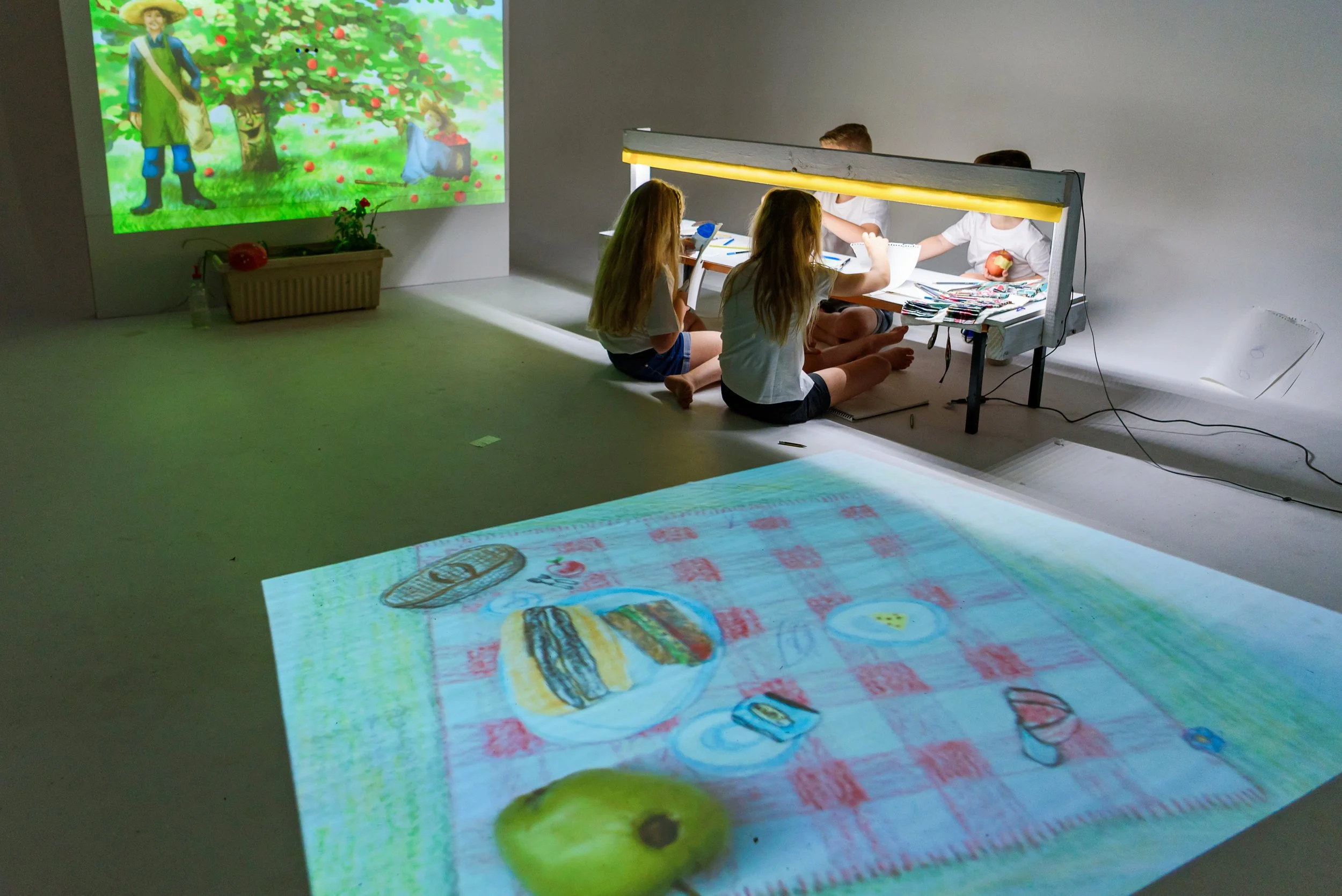
Incubated in partnership within a G8 Education preschool and co-created with its community, Magic Garden 2 envisioned the future classroom as an immersive and interactive theatre, complete with a Makerspace for children to build it. It sparked children’s creative genius, illuminated their hidden strengths and engaged parents.
Learnings from Magic Garden 1
Preliterate children are philosophical when they engage in Arts and Crafts activities, such as role playing and making stuff. These creative activities and philosophy are key behaviours of creative genius. I formed the hypothesis that if we give children a space to enjoy role playing, building and being philosophical in, it will spark their creative genius.
Opportunity
I wanted to prototype this hypotheses to observe its behavioural impact in full effect. Classrooms are largely uninspiring, so the greatest measurable impact we could achieve would be in a preschool.
Objectives
To measure the behavioural impact and prove the design’s value to businesses.
To increase the preschool’s reputation and engagement of both children and parents with a design that children could operate during self-directed play hours.
Team & community
With investment capital from both the preschool, their parents and an investor, we formed a UX Design team with full stack software engineers. To work co-create new engagement models with the preschool community I embedded myself as an educator in the preschool prototyping and learning what worked with children, families and educators. Cape Town University’s School of Education provided support on doing philosophy with preliterate children.
Time and budget
6 months in 2015, $30,000 AUD.
Abundance Design Process
STEP 1 – Vision! Together, build a prototype of a radically positive future to discover the opportunity.
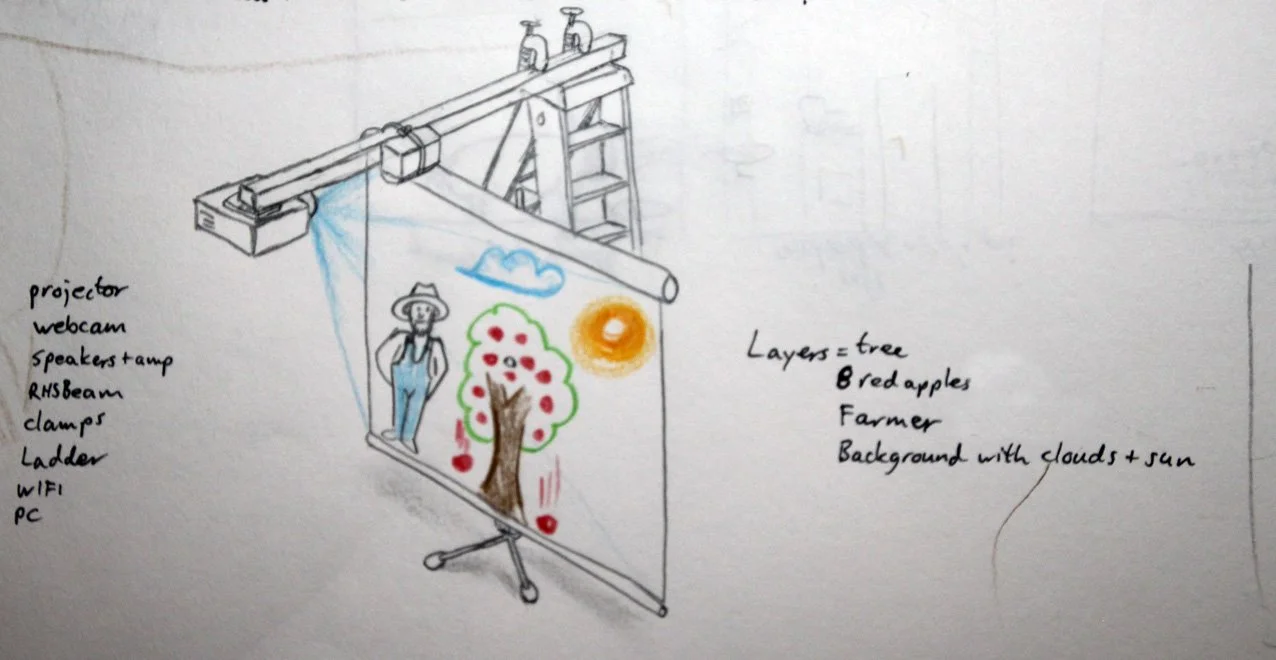
Using a sketch of the vision and a simple prototype made from basic office equipment, I partnered with a G8 preschool and raised $10,000 to incubate the startup, all in the same meeting. To discover what would maintain engaging both children and their parents be creative enough to operate a business upon, I needed to discover the parents’ enduring need for their children to advance first before spending money on a solution. To learn this and grow community support, I embedded myself as an educator in the classroom. By prototyping with the preschool community new ways of sparking role plays and philosophical reasoning, including ways to engage parents, I learned what worked phenomenally well. I then verified findings with Cape Town University’s School of Education.
STEP 2 – Why? What is that grand opportunity people keep seeking to advance themselves? Now build that instead!
Key insights
Parents I interviewed, said they prioritised their child’s creative free play time as being essential for learning about life, structured school preparation was dulling their creativity instead. The parent’s enduring need for their child to advance was therefore prepare them for life (relationships and work) by offering them free-play opportunities in the classroom to keep unfolding their unique creative expression.
Key Observations
When children were then given white space and simple, familiar materials to sketch their story, it sparked joy and a sequence of creative behaviours from role playing the story to being philosophical about it. Providing white space worked because it was free of rules to constrain their creativity. Their inspiration therefore came from within. Self-directed play kept them fully engaged for 2 hours compared to the drop-off rate of 3 minutes (average) for some structured actives, which shows that free play is structured when it’s purposeful and self-directed by children. Parents who video conferenced in to role play a character children had sketched laughed in joy and remained engaged.
Solution
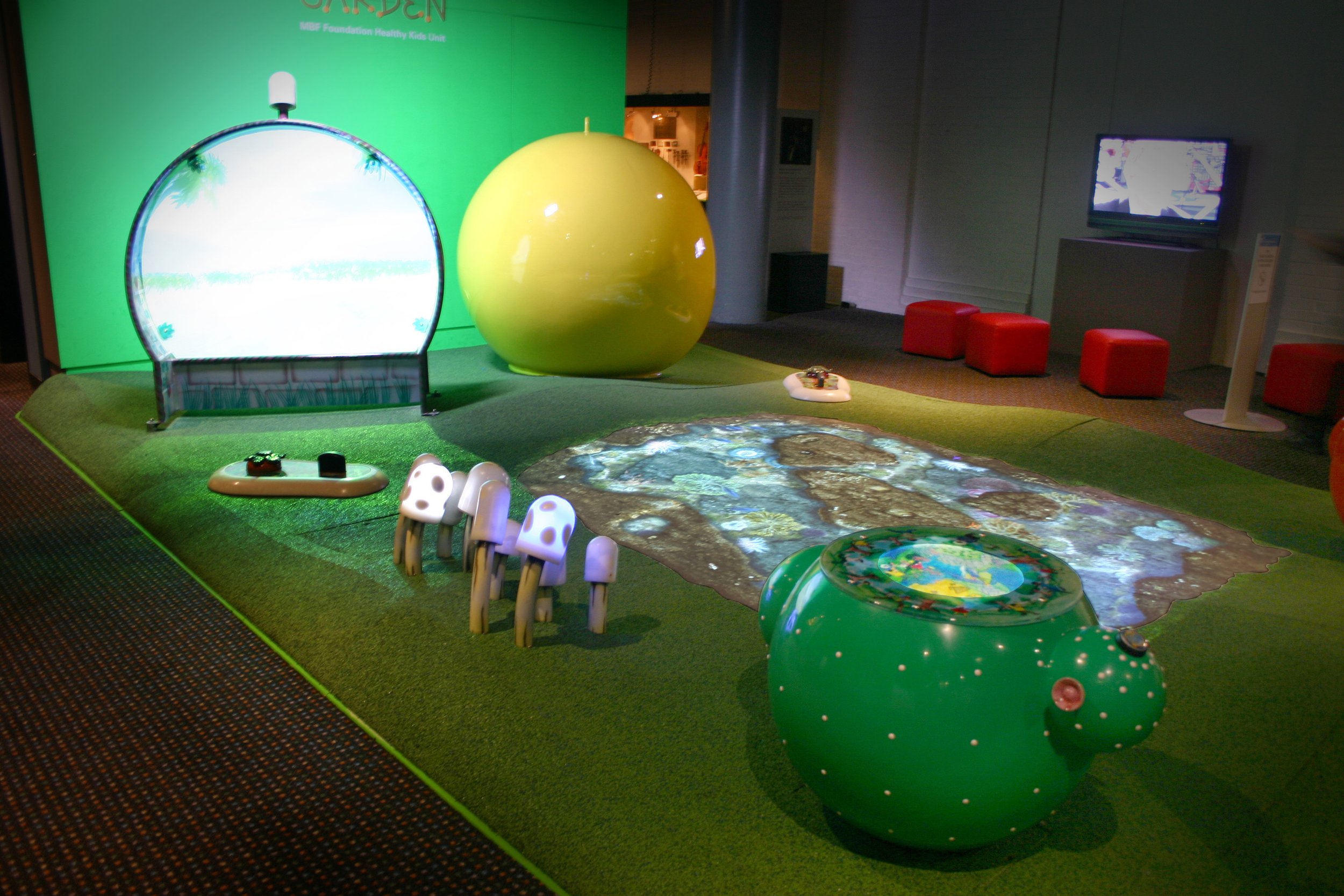
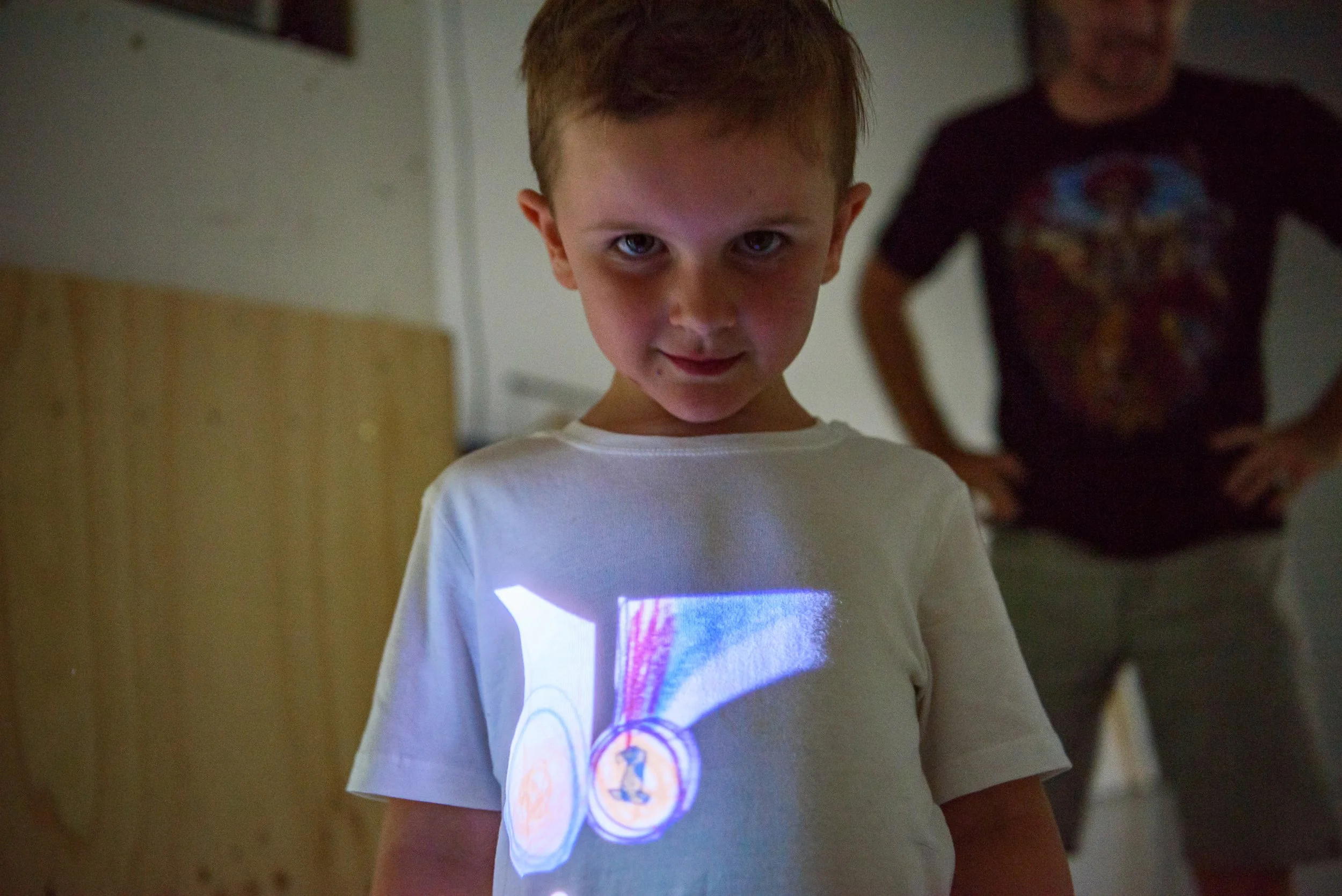
The classroom was re-envisioned as a theatre that sparked the joy of re-drawing the set as the narrative changed using digitally projected sets, props, costumes and a makerspace to sketch and build the sets in. A web app was developed for parents to join their children’s role plays.
STEP 3 – Scale! Build your design ready for a bigger, global audience.
The designs are now being prepared for mass production.
Impact
Children displayed increased, joy, maturity, settlement, focus, care, wisdom 3+ years their senior, engagement (with an uninterrupted dwell-time of 2 hours). Both fathers and mothers were inspired to engage in their child’s role plays. More moments of creative genius, leadership and talent were documented.
Business value
The design’s engagement and business model was proven when we were hired to stay on for a month. Increased reputation for the preschool.
Learnings for Magic Garden 3
White space allows children to enjoy expressing their creative genius because it’s free of restrictions.
Freely available materials and technologies that are instantly familiar to all, invite everyone’s participation.
The act of building something together, is where the bulk of the transformation happens. Significantly more than using the end product.
Building a prototype of a radically positive future together lets people enjoy expressing themselves in full and advance, because it’s void of their familiar struggles.
Next steps
To prepare the Magic Garden 2 playground designs for mass production.
To prototype Magic Garden 3 as a food lab that puts the joy back into being creative by bringing doing Design Thinking right back to basics.
Credits
EarthKids Early Childhood Learning Centre, a G8 Education Preschool for partnering, helping raise money and support from parents and incubating the startup. Capetown University’s School of Education for insights on doing philosophy with preliterate children. Philosophy. Michael Lai for angel investment and Senior UX support. Marianna Motta for illustrations. Packovation for assisting with carpentry and granting workshop space. _____ for full stack software engineering. Photography: Thomas Klockseth
Learnings from
Magic Garden 1
From Magic Garden 1 we learned that: “If we gave preliterate children the opportunity to build a storyworld they could roleplay and be philosophical in, it would inspire their creative genius and illuminate their unique hidden strengths.” And now I wanted to prototype this hypotheses to see its behavioural impact in full effect.
The Opportunity
From Magic Garden 1 we learned that: “If we gave preliterate children the opportunity to build a storyworld they could roleplay and be philosophical in, it would inspire their creative genius and illuminate their unique hidden strengths.” And now I wanted to prototype this hypotheses to see its behavioural impact in full effect.
Abundance Design Process
Using a sketch of the vision and a simple prototype made from basic office equipment, I partnered with a G8 preschool and raised $10,000 to incubate the startup, all in the same meeting. To discover what would maintain engaging both children and their parents be creative enough to operate a business upon, I needed to discover the parents’ enduring need for their children to advance first before spending money on a solution. To learn this and grow community support, I embedded myself as an educator in the classroom. By prototyping with the preschool community new ways of sparking role plays and philosophical reasoning, including ways to engage parents, I learned what worked phenomenally well. I then verified findings with Cape Town University’s School of Education.
At first, we used no technology to purely focus on identifying which activities triggered specific creative behaviours most effectively.
As we learned what activities activated children’s talents and why, we added technology in to further enhance its potential and to simplify a clunky experience. This way, technology never became a distracting entertainment because it fulfilled the child’s or adult’s purpose in getting a task done.
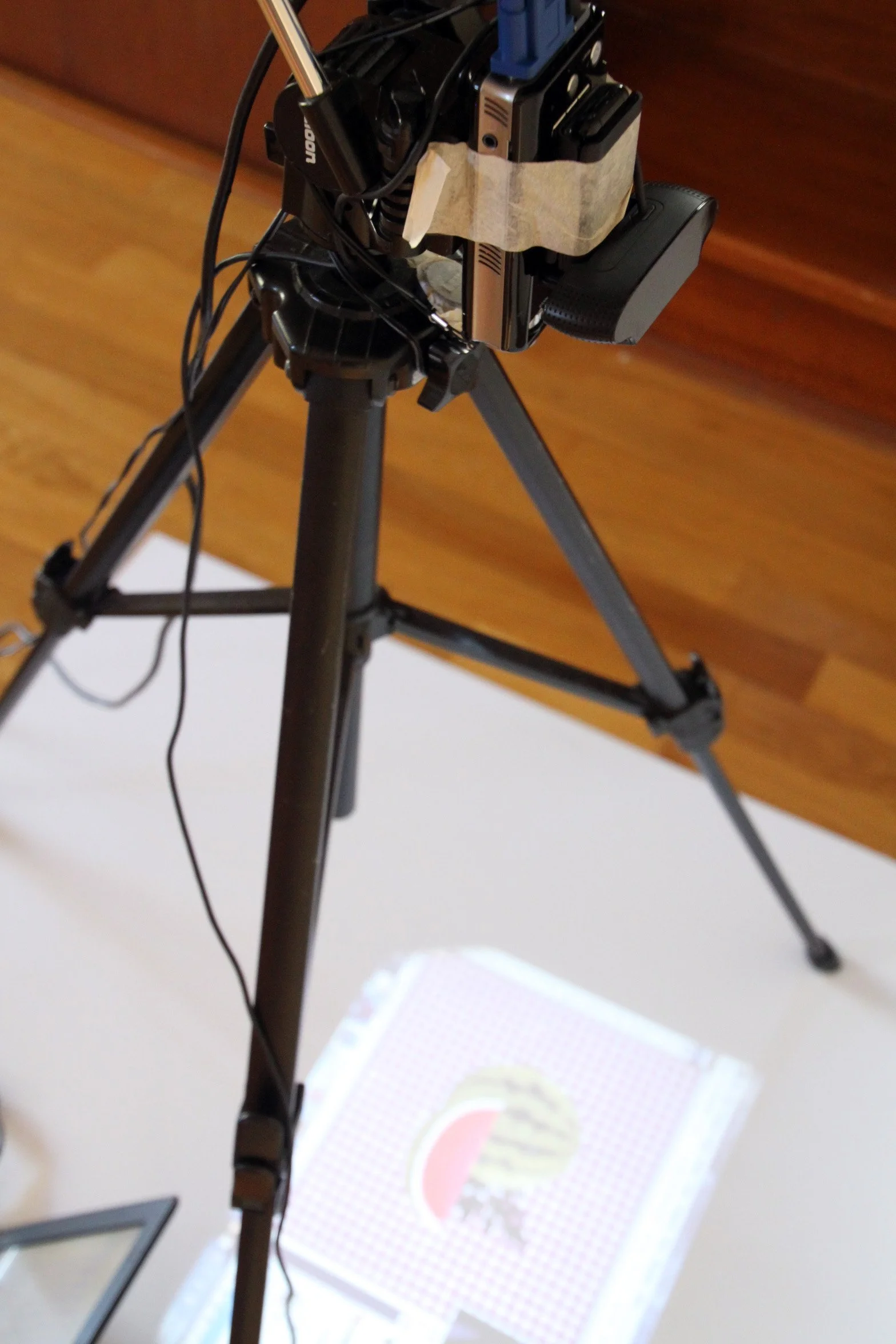
A prototype using basic office equipment lands a partnership and investment money:
A mini projector mounted on a tripod, projects onto the floor a sketch of a picnic blanket with fruit that was drawn on a piece of paper and captured by a webcam
Observations
Engaging children
We observed children routinely start role playing when they created a scene of 3 characters.
The sequence of behaviours we observed that sparked creative genius and leadership in children:
Three characters sparks a story.
This sparks a role play and materials are used to create the scene.
The role play tests realities and inspires creative problem solving. Creative genius and hidden talent emerge.
The cycle concludes with philosophical reflection. Wisdom is observed.
A decision to go again and improve or pivot the story including what gets redrawn and rebuilt.
This happened with an immediate speed and retained the children’s attention, often for longer than the 30-50 minutes we allotted to facilitate the activity for.
The immediate speed was an important indicator that children could maintain directing this activity unsupervised vs the many supervised activities in the classroom that felt forced and led children to abandon the activity after 3 minutes (on average).
Engaging parents
Parents and educators also laughed in joy whenever they video-conferenced in to see their face in one of the characters that the children had sketched for them to role play.
Outcomes
Both activities met our requirements to inspire engagement in the preschool community.
Technical innovation
simple, purposeful and Effective technologies inspire opportunities for new product development and revenue
Once we saw how visually representing the children’s stories sparked their role plays (and the whole sequence of behavioural patterns that we intended to discover), we introduced technologies to enhance it. To test quickly and keep the activity familiar (and thereby accessible) we first prototyped with whatever technology was already available in the classroom such as a laptop and a TV.
two product opportunities were developed
I enlarged the sketches on a TV to begin making the storyworld immersive. We then further enlarged the scenes using digital projectors.
I used 2 projectors to superimpose a video conference-call onto the sketch of a farmer so that the preschool community could play that role, as a quick test. I discovered that software to do this didn’t exist, so once the activity proved a hilarious delight to everyone we tested it on, we developed a web app that could facilitate adults joining a role play.
Pivot
But the space was competing with distractions in the preschool. So to measure and document the design’s full effect we piloted and it in a fashion photography studio.
Design Solution
The solution that emerged was a theatre with digitally projected sets, props and even costumes of characters children sketched on paper and projected on their white T-shirts. It was a theatre children could keep rebuilding and was inspired by both how theatres and STEM Makerspaces work.
The space also afforded parents, educators and artists globally to call in and play a part in the role plays.
Next, we tested this, by running an educational program in the photo studio.
The following slideshow demonstrates this program. It facilitated children philosophically exploring their relationship to the life-cycle of an apple while enjoying a real picnic eating apples in an orchard of apple trees.
Impact
We returned to the preschool to expand the study and work with the children to push the boundaries of what the design could facilitate in their Creative activities.
We began by creating story worlds based on the talents of children. One particular 4 year old boy who regularly exhibited hyperactivity and violence also had a talent and passion for expressing all things to do with sharks. His sketches were wel formed and detailed. If you asked him a question, he would nearly always give you the answer from a shark’s or the ocean’s point of view. So we recreated the theatre into a submarine to go on an adventure looking for sharks. As soon as he spotted a shark, he took the lead roleplaying being a shark chasing the other ‘classroom-fish’.
When we settled deep on the bottom of the ocean floor, I asked all the children, “Is it possible to have a special relationship with a shark?” While they said “no”, he said “yes”. So I asked the boy, how. Paraphrasing him, he said it was possible to have a special relationship with a shark if one has a special interest in the shark or wanted to protect it.
Instantly, I realised, ‘Are we not talking marine conservation here.’ I suggested the parents give the boy real experience in the field on day trips with marine conservationists to further unfold the talent.
We documented using observational surveys and video footage:
That by shaping the storyworld around a preliterate child’s talents, their maturity increased through a focused calm that allowed them to demonstrate conceptual reasoning years beyond their age. Educators conservatively observed a jump in 3 years’ maturity.
Preliterate children remained engrossed for 2 hours.
More moments of creative genius and leadership.
More talents documented.
Increased parent engagement.
Reduction in violent aggression between children.
Impact in action: the phenomenal talent of a boy who loved sharks
When we returned to the preschool we began by creating storyworlds inspired by spefic talents of children.
One particular 4 year old boy who regularly exhibited hyperactivity and violence also had a talent and passion for expressing all things to do with sharks. His sketches were wel formed and detailed. If you asked him a question, he would nearly always give you the answer from a shark’s or the ocean’s point of view. So we recreated the theatre into a submarine to go on an adventure looking for sharks. As soon as he spotted a shark, he took the lead roleplaying being a shark chasing the other ‘classroom-fish’.
When we settled deep on the bottom of the ocean floor, I asked all the children, “Is it possible to have a special relationship with a shark?” While they said “no”, he said “yes”. So I asked the boy, how. Paraphrasing him, he said it was possible to have a special relationship with a shark if one has a special interest in the shark or wanted to protect it.
Instantly, I realised, ‘Are we not talking marine conservation here.’ I suggested the parents give the boy real experience in the field on day trips with marine conservationists to further unfold his talents.
His depth of settlement, focus and wisdom was felt by all in the group. We got to see a richer range of leadership strengths, including his depth of care for animals and classmates. I also realised that the boy’s violence was masking his fine sensitivity to the environment he was constantly reacting to, and therefore masking his many other talents, wisdom and standards he held dear.
Key insight
By giving children completely white space to express themselves in full, I realised they were not restrained by rules on how to be creative that are otherwise commonly imposed on them in the classroom. Working in white space was therefore key to nurturing children’s innate creative leadership and preparing them for their future of work.
Learnings for
Magic Garden 3
I then read a longitudinal creativity study by George Land and Beth Jarman, which showed that 98% of children exhibited genius level creativity and that by adulthood this was reduced to a mere 2% of adults. In contrast to what we observed in the photo studio, I then realised, that every feature of a classroom is by design dulling the creativity of children, because the teams hired to create an inspiring classroom have already had their creative genius dulled. Everything from furniture and activities to books and murals on the walls.
It sparked me to catalogue with a teacher the design strengths and flaws of learning environments. This will be published as a manifesto.
Using what we learned, I’m now developing:
Modular designs of Magic Garden 2 for mass production
A course to teach the design process.
Let’s Work Together
Inspired to collaborate or have questions? Give me a call, I’d love to support.
Mobile / WhatsApp / WeChat / Signal: +61 416 858 303
krister@krister.designer@gmail.com
Sydney, Australia (Chatswood)